

The Cabinet of Ministers of Kyrgyzstan submitted for public discussion a large-scale program for the development of physical culture and sports through 2030 — a document intended to serve as a roadmap for modernizing the sports sector in the coming years.
The program covers all key areas, including mass and professional sports, infrastructure, personnel training, digitalization, and the development of national sports. Its main goal is to build an accessible, modern, and sustainable system that strengthens public health and enhances the international competitiveness of Kyrgyz athletes.
Currently, only 15 percent of the population in Kyrgyzstan regularly engages in sports.
The government plans to raise this figure to 30 percent by expanding access to sports clubs, school leagues, student competitions, and sporting activities for adults and older people. More than 3,000 mass sporting events are expected to be held annually across the country to promote an active lifestyle.
Special attention is paid to infrastructure. The program envisages the construction of low-cost sports hubs in rural areas, the creation of accessible sports zones and tracks, and the development of modular sports complexes. The state also plans to inventory sports facilities nationwide and eliminate infrastructure shortages, especially in rural areas.
Another key component of the program is the training of sports doctors, psychologists, nutritionists, coaches, and referees.
Plans include modernizing the education system, increasing state-funded training places for coaches, and establishing regional sports medicine centers.
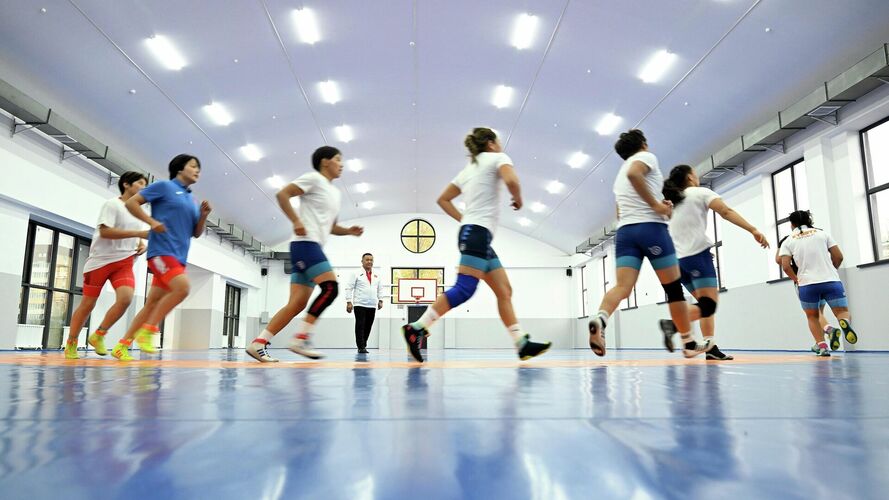
A separate section focuses on high-performance sports, including the construction of training bases, improving the system for developing athletic reserves, and expanding the participation of national teams in international competitions.
National sports, including kok-boru and traditional Kyrgyz equestrian games, will also receive support, with development centers to be established in every district.
A core element of the upcoming reform is digitalization. The government plans to create a national digital platform, e-sport, which will integrate data on athletes, coaches, competitions, and sports facilities. The platform will enable the automation of public services, monitoring, and performance evaluation.
All state and municipal bodies involved in implementing the program will report on progress twice a year.